
Skip garage door maintenance this fall and the bill usually comes due at the worst possible moment: a spring snaps while the door is halfway up, the opener quits during a cold snap, or a door that's been quietly rusting at the rollers finally jumps its track. None of these show up out of nowhere. They're the direct result of a summer spent swelling in humidity, getting pounded by afternoon downpours, and sitting through hurricane-season wind loads. Winter in Nocatee is mild, but the drop in humidity and temperature after months of coastal moisture is exactly when those stressed parts tend to fail. A thirty-minute check now is a lot cheaper than an emergency call later.
What This Summer Did to Your Door
Even if nothing visibly broke, your garage door has been working against a lot since spring. Heat and humidity swell wood-composite panels and weatherstripping. Afternoon storms push water against the bottom seal and threshold. Salt air, especially for homes closer to Ponte Vedra Beach and Palm Valley, accelerates rust on springs, cables, hinges, and roller tracks. And any named storms that rolled through tested the wind-load reinforcement on your door, whether you noticed it or not. As the air dries out heading into winter, panels and seals that swelled all summer start to shrink and contract, which is when gaps, misalignment, and noise problems tend to surface.
Inspect the Weatherstripping and Bottom Seal
Walk out at night with the garage light off and look for daylight or streetlight around the door edges. Gaps mean your seal has compressed, cracked, or pulled away from months of moisture exposure. A worn bottom seal lets in cold drafts, pests, and water from any remaining storm runoff. Replacing weatherstripping is inexpensive and one of the highest-value fixes you can make before winter.
Check Springs and Cables for Rust and Wear
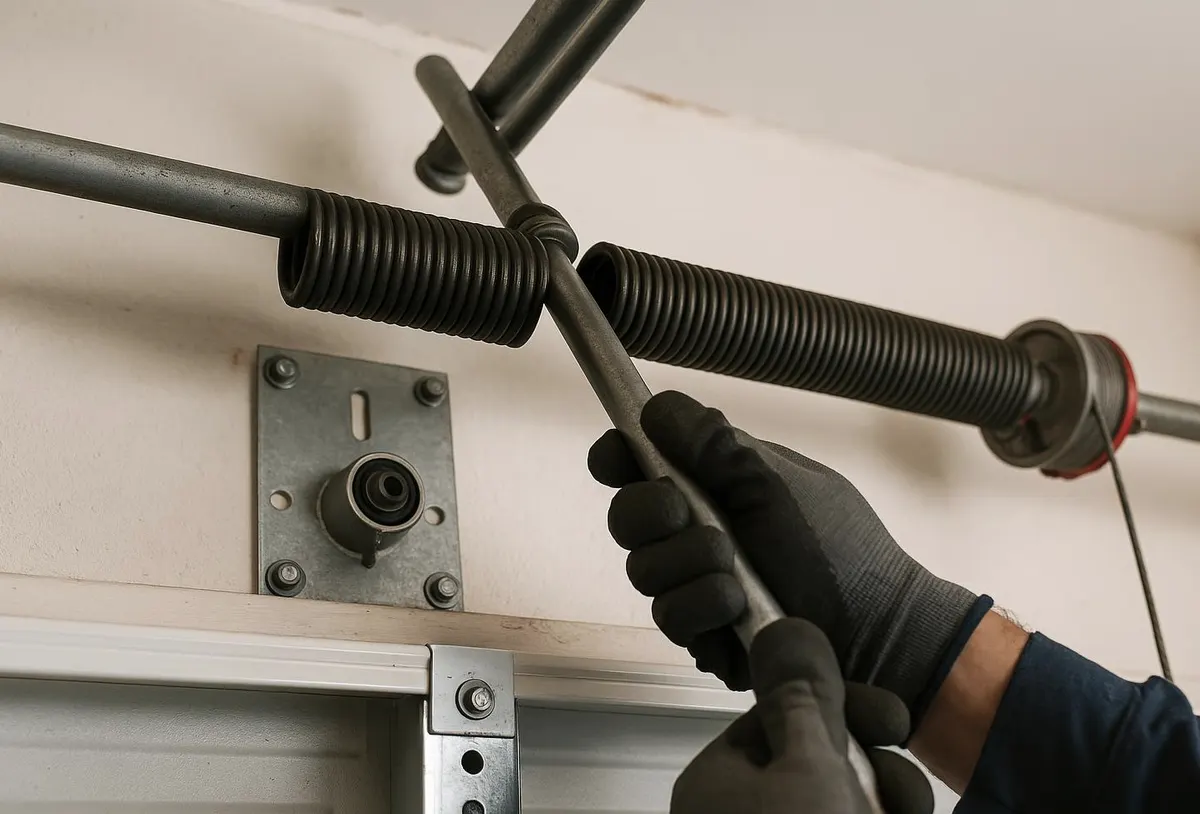
Springs do the heavy lifting on every open and close cycle, and humidity plus salt air speeds up corrosion. Look for flaking rust, gaps between coils that look uneven, or any visible fraying on the lift cables. A spring under tension that's also corroded is a genuine safety hazard — it can snap without warning, and torsion springs should never be adjusted or replaced by a homeowner. If you see rust or the door feels heavier than usual to lift manually, that's your sign.
Lubricate Rollers, Hinges, and Tracks
A summer of moisture followed by drying conditions is hard on rollers and hinges — they either gum up with grit or start squeaking from rust. Use a garage-door-specific lithium or silicone lubricant (not WD-40, which attracts dust) on hinges, rollers, and the track. While you're at it, check that the tracks are still straight and securely bolted; storm winds can loosen mounting brackets even if the door itself looks fine.
Test the Auto-Reverse Safety Feature
Place a 2x4 flat on the ground where the door closes. The door should reverse immediately on contact. Also check the photo-eye sensors near the floor on each side of the track — clean any dust or spider webs off the lenses, and make sure they're still aligned after any bumps from lawn equipment or storm debris. Misaligned sensors are a common cause of a door that refuses to close or reverses for no visible reason.
Look at the Opener and Its Connections
Humidity and heat are rough on electronics. Check that the opener's wall button and remotes still respond quickly, and listen for grinding or straining sounds during operation, which can mean the motor is compensating for a spring or roller problem elsewhere. If your opener battery backup (for storm outages) hasn't been tested since last hurricane season, do that now while you're already out there.
Watch for Rust on Hardware
Hinges, bolts, and track brackets near the coast corrode faster than inland. A light coat of rust-inhibiting spray on hardware (not on the springs themselves, which need proper lubricant) can add real life to these parts, especially for homes in Ponte Vedra Beach or Palm Valley dealing with regular salt air.
When to Call Precision Garage Door of Nocatee
If you're seeing rust on the springs or cables, a door that's noticeably harder to lift, or gaps in the weatherstripping you can't close up yourself, it's time to call in a technician rather than guess. Precision Garage Door of Nocatee handles garage door maintenance and tune-ups that cover spring tension, cable condition, roller wear, and opener safety settings in one visit, and we also handle cable and roller replacement when parts are too far gone to just lubricate. We serve Nocatee, Ponte Vedra Beach, Ponte Vedra, St. Augustine, Jacksonville Beach, St. Johns, Fruit Cove, and Palm Valley, and we show up on time and diagnose the problem fast.
Don't wait for a snapped spring or a stuck door to deal with this. Call Precision Garage Door of Nocatee today and get your garage door ready for winter the right way.