
How do you prepare a garage door for severe storms and high wind?
Check the door's wind-load rating against your home's exposure, reinforce or replace a door that isn't rated for it, tighten and inspect the track and hardware, and make sure the opener has a battery backup so the door can still close if the power drops mid-storm. The rest of this guide explains why that work matters and how to do each piece correctly.
Why the garage door is the weak point in the wall
Most exterior walls are solid, braced, and tied into the home's frame. A garage door is a large moving panel held in place by rollers, a track, and a spring system, not a continuous structural wall. When wind hits a closed garage door, it's pushing against the single biggest unsupported opening in the house. If that panel buckles or blows in, wind pressure suddenly has a way into the garage and, from there, into the attic and roof deck. That internal pressure is what causes roof uplift and secondary structural damage during tropical storms and hurricanes — often more damage than the wind alone would have caused from outside.
This is why a door's wind-load rating matters as much as its looks. A door built for a mild climate can flex and separate from its track under sustained gusts or sudden pressure changes, even if it looks fine sitting in the showroom.
Signs your current door won't hold up
- Visible bowing or flexing in the panels when the door is closed and the wind picks up
- Tracks that are loose, bent, or not firmly anchored to the framing
- Rollers or hinges with visible rust, especially on doors closer to the coast where salt air accelerates corrosion
- A door that's hard to lift manually, which usually means spring or cable wear that will only get worse under storm stress
- Weatherstripping that's cracked, flattened, or pulling away, letting wind-driven rain push past the seal
Steps to brace your garage door before the next system
- Confirm the wind rating. If you don't know your door's rated wind pressure, that's the first thing to find out. Homes closer to the coast and on more exposed lots generally need a higher rating than interior lots with more wind protection from surrounding structures.
- Add or inspect bracing. Retrofit reinforcement kits (horizontal struts bolted to the panels) stiffen an older door that isn't rated for current wind-load expectations. If a kit is already installed, check that the struts are still tightly fastened — humidity and seasonal swelling can loosen hardware over time.
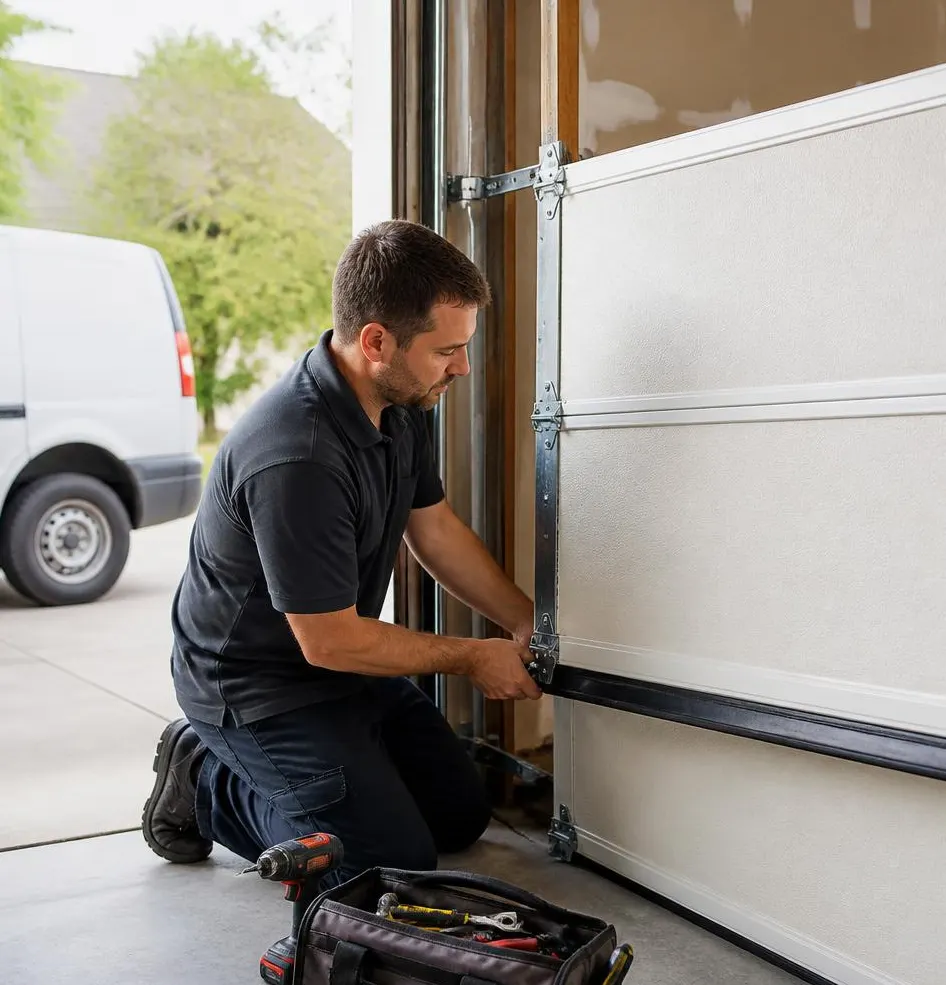
- Check the track and fasteners. Tracks should be firmly bolted to the frame with no play. Loose lag screws are a common, easy-to-miss failure point that lets the door rack sideways under pressure.
- Service springs, cables, and rollers. Worn springs and frayed cables are more likely to fail under the added stress of wind load. Rollers that are corroded or sticking make the door work harder to open and close, which adds strain right when you need the door to respond reliably.
- Test the manual release and battery backup. If the opener loses power during a storm, you need to be able to operate the door manually or rely on battery backup so the door isn't left stuck half-open.
- Clear drainage around the slab. Afternoon downpours common this time of year can pool water against the garage door bottom seal. Make sure the area outside the door slopes away and isn't trapping standing water that will seep in or accelerate rust at the base.
Coastal and humidity considerations
Salt air near the coast speeds up corrosion on springs, hinges, and roller bearings faster than most people expect, so hardware that looks fine on an interior-lot home may already be pitted on a door closer to the water. Humidity swelling is the other quiet problem: wood-composite panels and even steel doors with wood trim can swell slightly in heavy moisture, which throws off the fit in the track and makes the door harder to seal tightly against wind-driven rain.
When to call Precision Garage Door of Nocatee
If you're seeing rust on the rollers, a door that's hard to lift, a track that's pulled away from the frame, or you simply don't know whether your current door meets wind-load expectations for your lot, it's worth having it looked at before the next storm is on the radar. Our Garage Door Maintenance & Tune-Up service covers the springs, cables, rollers, and track inspection that catch these problems early, and our Cable & Roller Replacement service handles the worn hardware that's most likely to fail under wind stress. We'll tell you plainly whether reinforcement is enough or whether replacement makes more sense for your situation.
Call Precision Garage Door of Nocatee today to get your door storm-ready before the next system is in the forecast.